The End of the Picture-Perfect Family: How Millennial Parents Are Redefining Modern Household Culture
The Quiet Collapse of the Curated Family Feed
For years, family culture on social platforms was organized around visual control. The home was bright, orderly and deliberately neutral. Children appeared engaged but never overwhelmed. Milestones arrived on schedule, surrounded by tasteful objects and captions that implied both competence and joy. That picture-perfect family feed was never a complete representation of domestic life, but it offered a powerful cultural script: good parenting looked composed, productive and publicly reassuring.
Millennial parents are steadily dismantling that script. The shift is not simply a change in color palettes or photography style. It reflects a deeper rejection of the idea that family wellbeing must be demonstrated through visible perfection. Millennials, generally defined as those born between 1981 and 1996, came of age with social media, economic uncertainty and an expanding public conversation about mental health. Many now expect brands to understand that parenting happens amid financial pressure, conflicting advice, unequal care responsibilities, work demands and children whose feelings do not always fit a clean narrative.
For family-facing organizations, the implication is significant. The winning story is no longer manufactured harmony. It is emotional safety, practical relief and credible support when the day becomes noisy, inconvenient or unresolved. Brands that continue staging domestic perfection risk making parents feel judged or excluded. Brands that acknowledge real-world resilience can become more useful, more trusted and more culturally relevant.
The Psychological Toll of Staged Harmony
Maintaining a polished family image can become a second job. Every birthday, school achievement, family holiday and carefully arranged room appears to invite documentation, comparison and evaluation. The pressure is particularly sharp in a period when housing, childcare, healthcare and education costs create a difficult economic backdrop. Parents may be expected to provide enriching experiences while also demonstrating that the household is calm, sustainable and emotionally thriving.
This pressure changes the meaning of ordinary family moments. A child”s difficult afternoon can feel like evidence of parental failure rather than a normal part of development. A parent who is exhausted may still feel compelled to perform gratitude. The result is not only fatigue but a narrowing of what families believe they are allowed to show. The more domestic life is treated as content, the harder it becomes to acknowledge ambivalence, conflict or uncertainty without fearing social judgment.
Modern millennial parenting increasingly prioritizes emotional regulation over outward compliance. That does not mean abandoning boundaries or allowing every behavior. It means distinguishing between a child”s feeling and the child”s action, validating distress without rewarding harm, and making room for repair after conflict. Contemporary discussions of relational health emphasize the importance of recognizing needs, listening beneath defensive behavior and replacing automatic judgment with more conscious communication. Developmental literature underscores that positive, supportive parenting styles play a vital role in instilling a sense of purpose and buffering youth against psychological burnout, as outlined in this research on parenting style and wellbeing. When parents replace the anxiety of public digital curation with genuine, responsive engagement, they establish the foundation for lasting mental health.
- Replace milestone comparison with developmental curiosity.
- Make emotional recovery as visible and valuable as achievement.
- Present support as a normal resource, not evidence that a family is failing.
- Design communications that allow parents to recognize themselves without embarrassment.
The strategic distinction is important. Parents are not rejecting aspiration altogether. They are rejecting aspiration that requires denial. A product, service or campaign can still promise better routines, more confidence or greater joy, but it must show the route through inconvenience rather than skipping directly to the perfect outcome.
Generational Fault Lines in Everyday Household Culture
Parenting is one of the clearest places where generational expectations collide because it combines identity, family history and practical dependence. Boomer grandparents may place greater emphasis on manners, obedience, visible achievement and the question of what other people will think. Millennial parents are often more likely to focus on emotional literacy, consent, autonomy and the long-term effects of shame-based discipline. Neither generation is uniform, but the difference in default assumptions can create friction around screens, food, sleep, money and children”s reactions.
The contrast is especially visible in the meaning of boundaries. A performance-driven household may treat rules as proof that adults are in control, with compliance serving as the most important outcome. An empathy-first household treats boundaries as protective structures that still require explanation and flexibility. A parent might say, “You cannot hit your sibling, and you can be angry,” rather than treating anger itself as unacceptable. The boundary remains firm, but the child is not required to suppress a feeling in order to preserve the family”s image.
This shift also explains why “what will the neighbors think” has lost some of its authority. Millennial parents have grown accustomed to seeing multiple family models, diagnoses, identities and caregiving arrangements represented online. At the same time, they have become more aware of how difficult it is to separate genuine values from inherited social performance. Research and commentary on the millennial parent consumer describe a group under intense pressure from economic costs, online advice and expectations around emotionally focused parenting. These parents often want brands to provide clear, evidence-informed guidance rather than add another layer of judgment.
| Traditional posturing | Modern adaptive norms |
|---|---|
| Good behavior is primarily quiet, compliant and publicly approved. | Good behavior includes emotional awareness, repair and respect for others. |
| Family problems should remain private to protect reputation. | Appropriate openness can create support, solidarity and better decisions. |
| Rules are presented as fixed proof of adult authority. | Boundaries are explained, consistent and responsive to context. |
| Milestones signal successful parenting. | Security, connection and growing autonomy signal healthy development. |
For brands, these differences affect both message and product design. A campaign that praises the endlessly patient parent may alienate the audience it intends to inspire. A service that assumes grandparents, two parents and a stable income may fail to reflect actual households. Cultural relevance begins with recognizing that family authority is increasingly negotiated through trust, clarity and responsiveness, not simply inherited status.
Redefining Intentionality in Shared Family Rituals
Intentional family life is also moving away from consumerist spectacle. The new priority is not necessarily fewer celebrations or less ambition, but experiences that restore rather than exhaust. A family ritual might be a weekly walk, an unhurried meal, a screen-free hour, a shared creative project or a predictable bedtime conversation. Its value comes from repetition and emotional availability, not from its photogenic quality.
Travel offers a useful illustration. The 2026 Global Travel Trends Report, based on a Morning Consult poll conducted across seven countries between December 30, 2025, and January 14, 2026, identifies growing interest in milestone extensions, hands-on destination activities, unusual discoveries and local food experiences. These patterns suggest that families increasingly value participation and memory-making over the acquisition of impressive objects. For marketers, the opportunity is to frame experiences around connection, curiosity and shared agency rather than status.
Unstructured play matters for the same reason. It gives children room to direct activity and gives adults a chance to observe without constantly instructing. Intentionality can also mean reducing the number of decisions a household must make. Clear routines, accessible information and practical products can protect limited emotional energy. When parents are already navigating conflicting advice, a brand should simplify choices instead of turning every purchase into a referendum on their values.
- Build rituals that are repeatable during ordinary weeks, not only during special occasions.
- Show travel and leisure as opportunities for participation, not proof of family status.
- Make room for listening, repair and boredom alongside planned enrichment.
- Use candid podcasts and community conversations to normalize imperfect caregiving.
Public health priorities reinforce this direction. The Authoritative Source, the U.S. Surgeon General”s youth mental health guidance, places emphasis on supportive relationships, safe environments and the conditions that help young people thrive. This is not a creative trend alone. It is a broader cultural movement toward treating emotional connection as infrastructure. Family communicators should therefore ask whether a campaign merely depicts closeness or actually helps families create it.
Actionable Narrative Codes for Modern Family Communicators
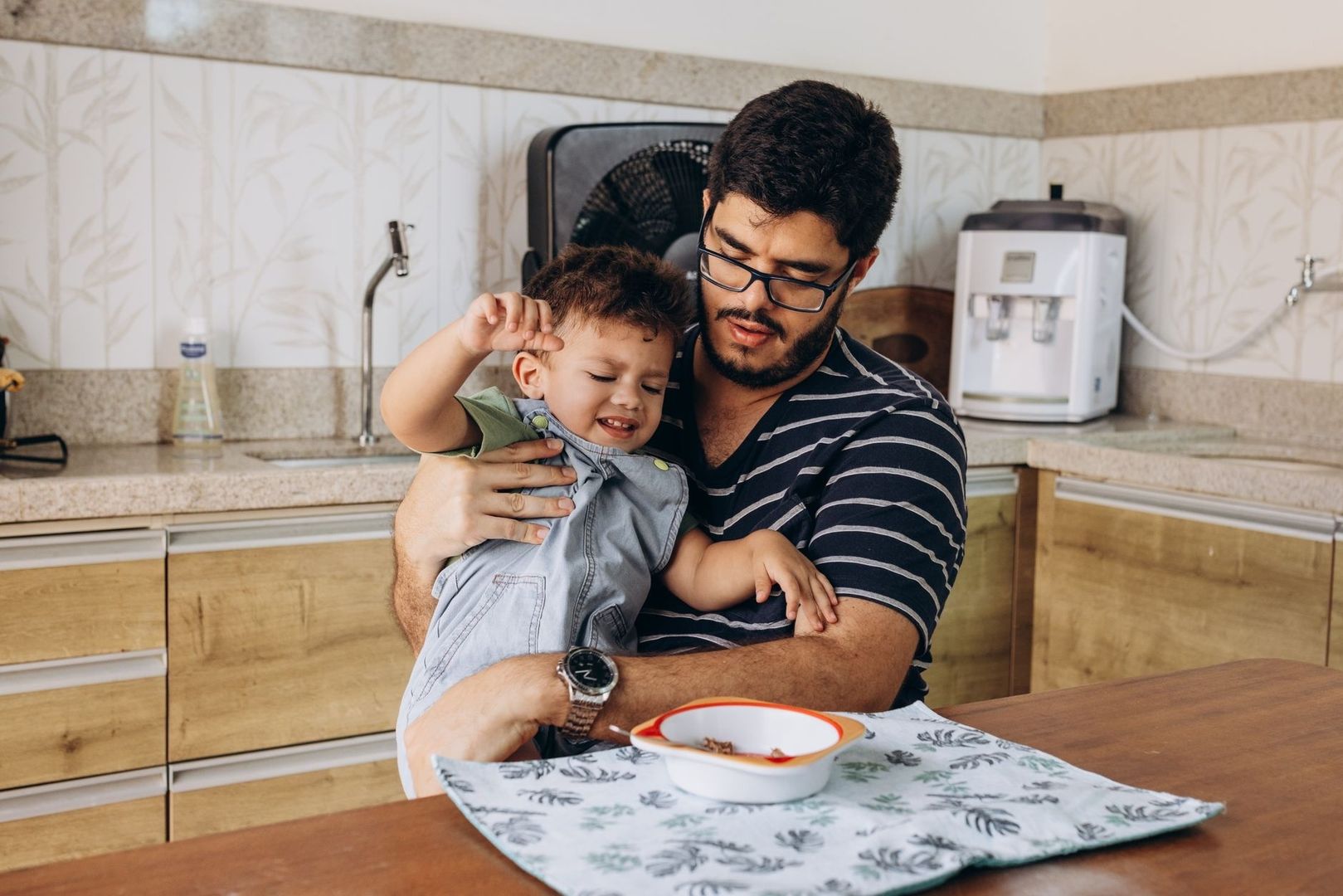
The visual language of family marketing needs to catch up with household reality. Clinical symmetry, empty counters and uniformly calm children communicate control, but they can also communicate distance. Lived-in spaces, mixed ages, visible accessibility needs and moments of transition can signal that a brand understands how families actually function. The objective is not to manufacture mess for authenticity. It is to show useful, recognizable details: a half-finished breakfast, a child changing their mind, a parent taking a pause or siblings negotiating shared space.
Copywriting requires an equally meaningful adjustment. Replace language that implies a product will make someone a perfect parent with language that offers relief, confidence and flexibility. “Make every moment magical” is less credible than “Make busy mornings easier.” “Raise exceptional children” creates pressure; “Support your child through the next step” creates partnership. The strongest messages validate the parent”s intention while respecting the complexity of execution.
Brands should also distinguish between vulnerability and exploitation. Showing a difficult moment is not automatically authentic if the family”s struggle is used merely to trigger engagement. Responsible storytelling protects dignity, avoids turning children into emotional props and offers a clear benefit beyond recognition. If a campaign invites parents to share sensitive experiences, it should make the purpose, moderation standards and support pathways clear.
- Map the real pressure points. Use interviews, search behavior, customer service data and community listening to identify where parents lose time, confidence or emotional capacity. Do not rely only on aspirational focus groups.
- Separate the audience from the stereotype. Millennial parents are not a single personality type. Segment by household structure, economic reality, caregiving support, child age and cultural context rather than assuming that every parent wants the same version of authenticity.
- Turn empathy into utility. Pair emotional recognition with practical help, such as clear instructions, flexible options, credible education, accessible pricing or tools that reduce cognitive load.
- Test the emotional temperature. Ask whether the work makes parents feel welcomed, exposed, pressured or quietly judged. A message can be visually diverse yet still communicate perfectionism through its language.
- Measure trust over performance alone. Track repeat use, recommendation, perceived honesty, support-seeking behavior and long-term brand consideration alongside reach and engagement.
Internal behavior must support external storytelling. A brand cannot credibly celebrate family wellbeing while making customer support difficult, hiding fees or ignoring parental leave and accessibility. Millennials increasingly connect purchases with social, ethical and environmental values. Trust therefore travels across the entire experience, from advertising to product design, policy and service recovery.
The most persuasive family communications will make space for unfinished stories. They will show that resilience is not constant calm, but the capacity to pause, adapt, ask for help and reconnect. That framing gives brands a stronger role than lifestyle decoration. It positions them as useful participants in the systems families depend on.
Building Long-Term Cultural Resonance in an Unfiltered Era
The family culture now emerging is less interested in proving that everything is under control than in creating conditions where people can be honest when it is not. Millennial parents are moving from aesthetic curation toward relational resilience, from public compliance toward emotional awareness and from milestone display toward sustainable daily connection. This does not eliminate aspiration. It changes what aspiration means.
Brands that meet parents in the middle of real life can earn durable relevance. That means respecting the messy kitchen, the interrupted routine, the complicated feeling and the family that does not match a stock image. Manufactured harmony may still produce a polished campaign, but meaningful trust comes from helping people feel understood and supported. In an unfiltered era, the most culturally resonant storytellers will not ask families to perform wellbeing. They will help families build it.